FICTION · DRAMA · CREATIVE INTELLIGENCE
In brief
Who this is for, and what it helps you decide
Creators and small teams making AI short dramas, motion comics or web-novel adaptations—especially those juggling separate tools for scripts, images, storyboards, voice and editing—and localization teams thinking of turning an existing short drama into versions for other markets.
It helps you decide whether to put Jimeng’s Short Drama Studio on your trial list for the next project, which stages (script breakdown, storyboard previs, reshoots, localized remakes) it might replace, and which rights and platform rules to check first.
What was announced
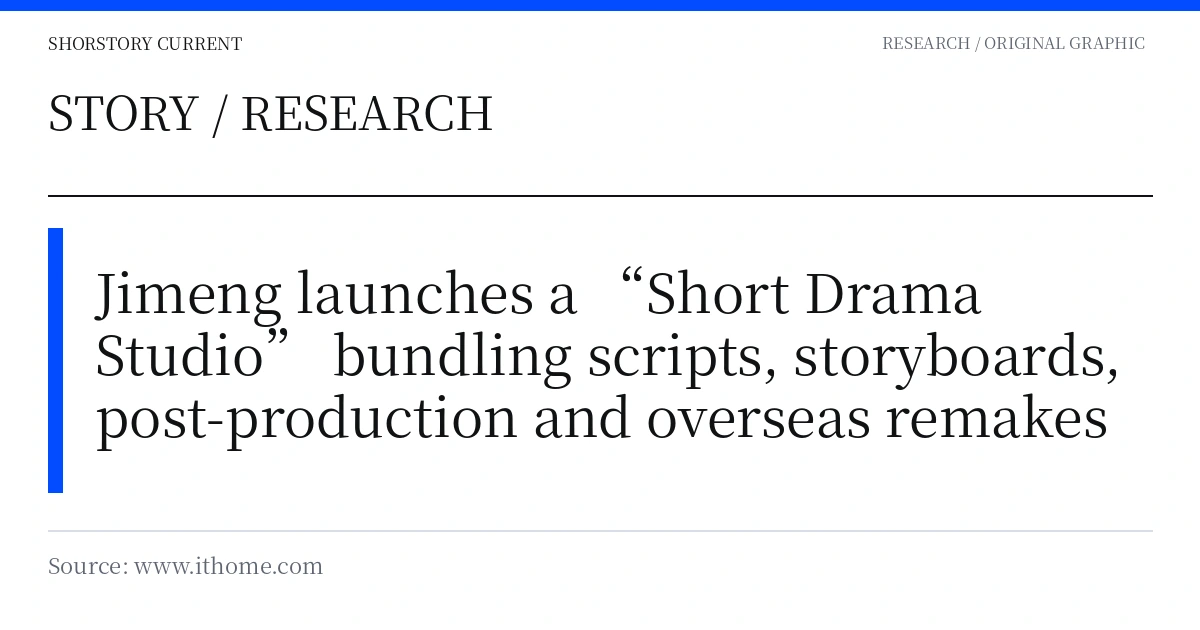
As relayed by IT Home: DreamScript generates scripts across original, adaptation, overseas and commentary formats, offers a “hit diagnosis”, and can parse long texts of around 100,000 Chinese characters. Anycook is tuned for short-drama art, character design and multi-style scenes. DreamShot has canvas and storyboard modes, conversational revisions, and a “3D director’s stage” for setting camera positions and moves to preview key shots.
Post-production covers reshooting a single shot, separating voice from background audio and re-dubbing, automatic shot splitting, and shared assets so one change propagates across the project. The remake mode analyses an uploaded short drama’s characters, scenes, props and shot structure, then regenerates the visuals for a selected style, aspect ratio and target region while keeping the original pacing and shot language.
Jimeng’s homepage (read October 28) shows “Short Drama Studio now live / build hit short dramas in one place”, with a login-gated entry. Claims such as “hit diagnosis” are platform marketing we cannot verify.
What remains unclear
Public reporting gives no official figures for pricing, credit cost, clip length or episode limits; figures such as “100 consecutive episodes” seen in some coverage could not be verified from a readable original, so we do not use them.
The remake mode regenerates existing works: uploading someone else’s show, or one without adaptation or overseas distribution rights, does not resolve copyright. Labelling and filing rules for AI-generated content on target platforms also need separate checking.
What it may mean for creators (editorial inference, untested)
For web-novel authors and small teams, the most direct change may be squeezing the long text → script → storyboard front end into one tool. A sensible start is a pilot with one chapter or short story to judge adaptation quality and rework, rather than committing a whole book.
For teams holding rights to existing shows, the remake mode points to cheaper multi-market versions, but visual consistency, lip-sync and dubbing quality need your own tests.
Consolidation also means assets and settings live on one platform; keep your own scripts, character bibles and storyboard drafts to avoid lock-in. All of this is editorial inference.
Method & limitations
On October 28, 2026 (Beijing time) we read the full IT Home report of October 26 and Jimeng’s homepage, including its Short Drama Studio entry. Feature descriptions are paraphrased from Jimeng’s announcement as reported; creator implications are editorial inference and labelled as such. Another trade report was not cited because its body could not be fully read.
We did not log in to or test the Short Drama Studio and verified no model output. We found no fully readable official announcement text from Jimeng; pricing, quotas and terms are unknown. Features and entry points may change; “hit diagnosis” and similar terms are the platform’s own wording.
Sources & editorial note
These links identify the public sources. Third-party statistics remain attributed to their publisher; our studies state what was actually read or viewed. See the methodology for scope and limits.
Source published: Oct 26, 2026
Source published: Unknown; not confirmed by the source
- Published
- Oct 28, 2026
- Updated
- 28 Oct 2026, 10:36
- Verified
- 28 Oct 2026, 10:36