FICTION · DRAMA · CREATIVE INTELLIGENCE
In brief
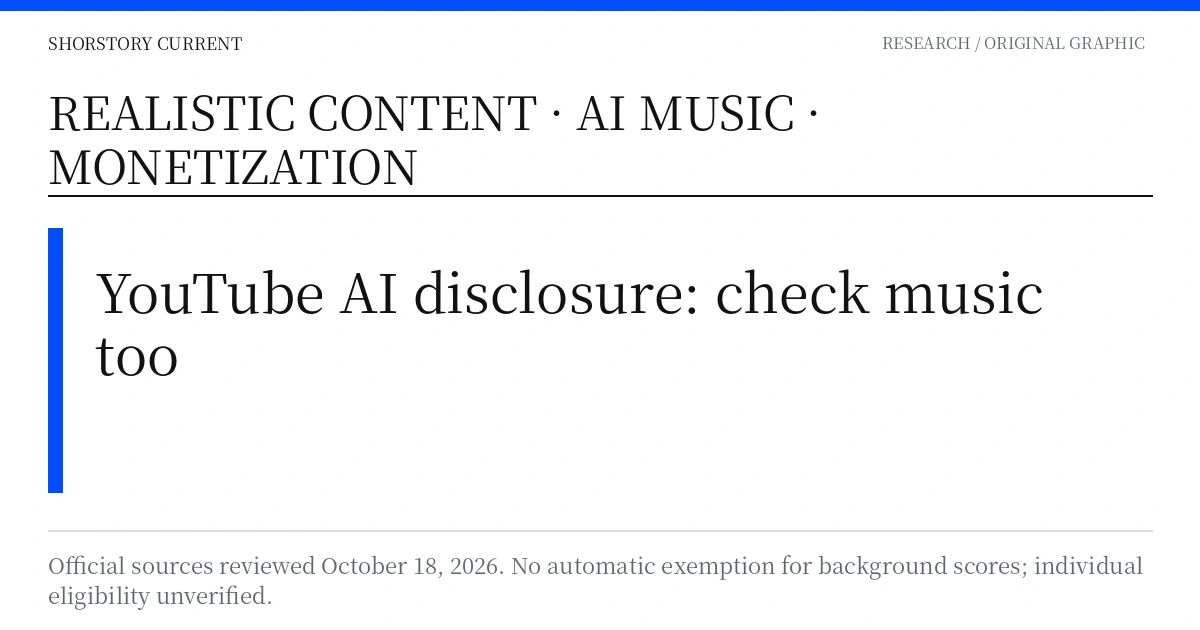
Check realistic content, then music
YouTube requires disclosure for realistic AI-generated or meaningfully altered material, including fabricated actions by real people, altered real events or places, and realistic scenes that never happened. A fictional plot does not by itself remove the realistic-scene criterion.
The Help page lists unrealistic visuals, minor cosmetic edits and production assistance among examples that need no disclosure. That describes those elements, not an exemption for an entire video: check AI music separately.
Three creator cases, assessed by component
A photorealistic AI drama adapted from fiction: our editorial advice is to check the realistic-scene rule rather than select No simply because the plot is invented. This applies the policy to a production scenario; it is not YouTube’s ruling on a particular video.
An obviously drawn motion comic: the visuals may fit the unrealistic examples, but review voice impersonation and AI-generated music separately. Visual style cannot settle the audio questions.
AI-assisted scripts, captions or image repair: the Help page lists production assistance as ordinarily not requiring disclosure, and includes cloning your own voice for narration among minor edits. Making someone else appear to say words they never said raises a separate real-person question.
Do not skip the AI music check
The Help page explicitly covers AI-made music that is the main focus of a video and separately lists AI-generated music among disclosure examples. An animated music video therefore cannot rely on its visual style to avoid this check.
The pages reviewed do not fully specify the background-only boundary. We do not infer an exemption for background scores; check the applicable music guidance and Studio prompt before uploading.
The upload setting and automatic labels
The English Help page directs creators to Attributes → AI use during upload in YouTube Studio, selecting Yes when the disclosure criteria apply. These are source terms; we have not tested your account, device or translated interface.
YouTube can also label content using tool signals, C2PA metadata or internal detection. Help describes exceptions to correcting labels from its own AI tools, C2PA and manual review; the May 27 blog describes the C2PA case as metadata indicating fully generative production. Do not assume every automatic label can be removed.
Read both label descriptions, then check the display
The official May 27, 2026 blog places labels below the player for realistic or meaningfully altered long videos, over Shorts, and in expanded descriptions for unrealistic or animated content. The undated Help page also describes possible in-player labels for music or photorealistic AI and expanded-description labels for other cases.
The descriptions differ. With no publication date on Help, we cannot establish which wording is newer or supersedes the other. We have not tested these displays; check the actual viewer page and Studio notices after publishing.
Disclosure and monetization are separate checks
According to YouTube Help and the blog, a disclosure label alone does not restrict audience, change recommendations or remove earning eligibility. It does not certify that a video meets every monetization requirement.
The separate monetization policy examines originality, repetition and value. Recurring characters are allowed, but episodes need materially different substance. Generic templates or disconnected AI clips can fail those standards. Our editorial recommendation is to keep a series identity while giving each episode a distinct problem and character choice.
Copyright and other policies still apply. Help lists possible consequences for persistent non-disclosure, including platform labels, removal and YPP suspension. No individual channel has been assessed here.
Four checks before uploading
Visuals and voices: identify realistic invented scenes, meaningful changes to real footage or fabricated real-person speech and actions.
Music: check whether AI generated it. Treat music as a separate decision, and do not infer a background-score exemption from unrealistic visuals.
Upload: compare the current guidance with the AI use setting, distinguishing production assistance from changes in the finished video.
After publishing: inspect labels and notices, then separately review originality, rights and monetization conditions. This is an editorial checklist, not an official decision tool.
Source dates and this revision
First published October 13, 2026; revised after reviewing three official sources on October 18. The Help pages have no overall publication date; the blog is dated May 27, 2026. A July 15, 2025 change note does not date every part of the monetization page. This updates a guide, not a same-day policy announcement.
Method & limitations
Checked disclosure criteria, interface wording and monetization boundaries against three official YouTube pages; editorial interpretations are identified.
No Studio login, label-display test or individual eligibility assessment. Official examples are not exhaustive; check the current interface and conditions that apply to your upload.
Related research & methods
Story Frontier Daily | October 15: YPP membership is not the same as Shorts earnings
Douyin’s 43/57 split and Hongguo’s 100 3D titles: choosing a format from September charts
Sources & editorial note
These links identify the public sources. Third-party statistics remain attributed to their publisher; our studies state what was actually read or viewed. See the methodology for scope and limits.
Source published: Unknown; not confirmed by the source
Source published: May 27, 2026
Source published: Unknown; not confirmed by the source
- Published
- Oct 13, 2026
- Updated
- 18 Oct 2026, 17:34
- Verified
- 18 Oct 2026, 17:09